 Image 1 of 4
 Image 2 of 4
 Image 3 of 4
 Image 4 of 4
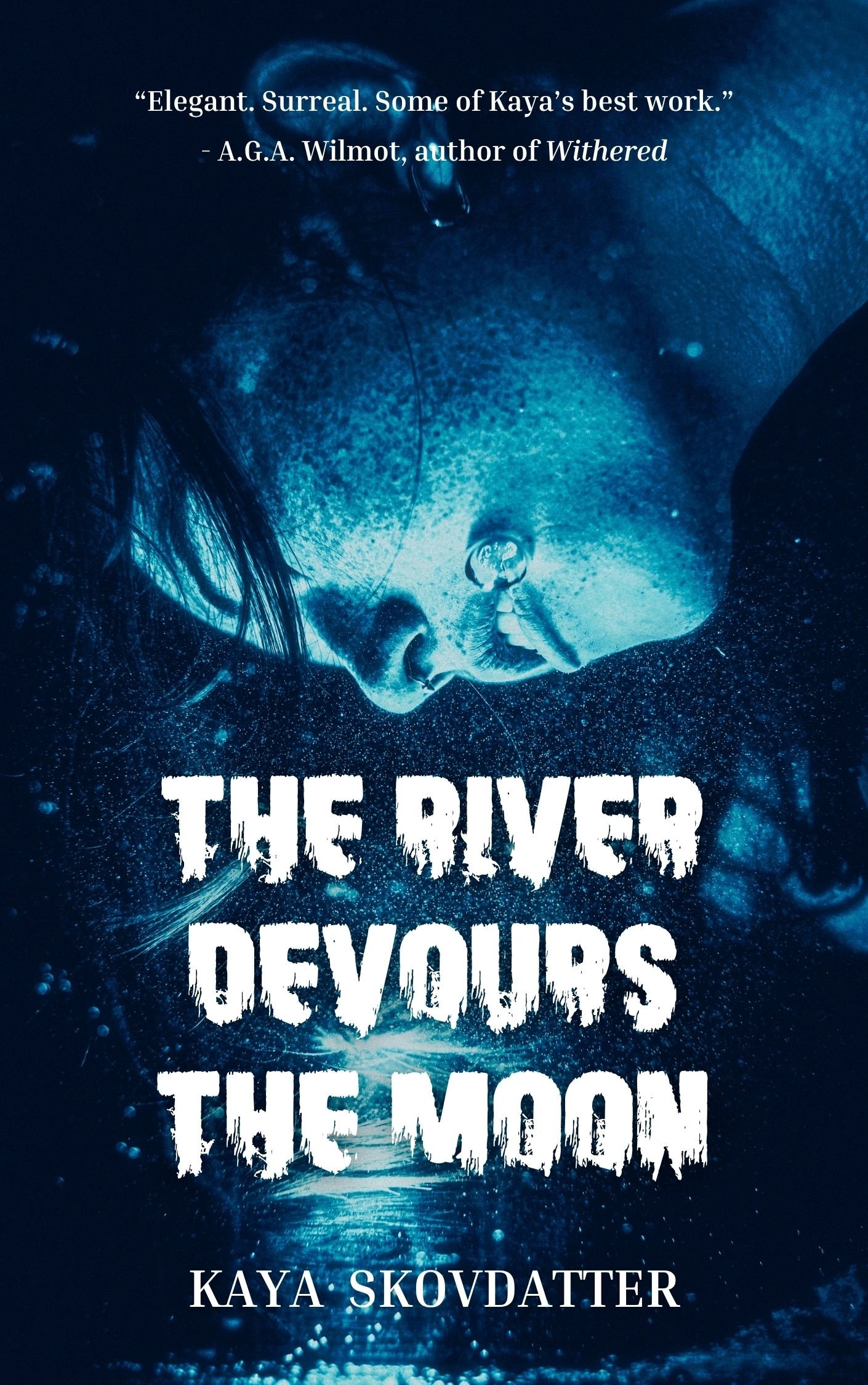
“Elegant. Surreal. Some of Kaya’s best work.”
- A.G.A. Wilmot, author of Withered
Want to sample before you buy? Read on:
This preview is pulled from an advance reading copy of the novella, and may not be reflective of final edits on release.
Caught a hundred feet downstream of the Bloor Viaduct, Lixue’s corpse is battered from buttressing up against jagged rock and river bottom. Yuehua can just make out the hollows around her eyes, her former lover’s face framed by tendrils of dark hair submerged in sluggish current. Yuehua’s breath frosts in the air as she kneels outside the circle of light, features backlit gas-lamp pale by lanterns laced along the base of Toronto’s Luminous Veil. In the weak light from streetlamps atop the bridge, the Bloor Viaduct’s suicide barrier is a string of false crosses canted out over the valley floor. The towering barrier an answer to bodies falling swift and frequent, in numbers superseded before its construction only by the Golden Gate Bridge and Aokigahara, the Suicide Forest. The Viaduct’s gleaming, too-solid barrier casts its shadows long, phantom jumpers held fast by lines of wire and caging mesh.
But Lixue is no suicide, no jumper.
Thick snow, stark in the competing artificial light, coats Yuehua’s shoulders. Weighs her down and soaks through her flimsy clothes. She’s the only officer on the scene not in uniform. The only officer from 52 Division.
She’s not supposed to be here.
Officers from 51 mill around the two women — take photographs, make sketches, erect caution tape along the edges of the scene. Already their heavy jackets are slicked wet, black-furred collars speckled white, hat brims frosted. Their fingers ache in the whistling cold.
They barely register for her — ghosts whispering in the air. Her gaze fixed on closed eyes, a narrow face with features so mirrored that at a remove the two women might be sisters.
She doesn’t move as Lixue rolls her limp head to the side and opens her eyes to whisper: “Yuehua?”
“—Yuehua?” repeats Dagmar, those ever-cold fingers on her shoulder. Yuehua blinks; exhales a cloud of vapour. The woman in the water has not moved. Yuehua can’t recall when Dagmar arrived, but the presence of another officer from 52 — her presence — is welcome. “Who called you?”
“No one,” says Yuehua, unable to tear her eyes from how the river’s flow pulls at the tangled shroud in which Lixue is wrapped. The fingermarks on her throat gone black in the monochrome light. Yuehua’s gaze travels back upriver, following slow bends and tree-lined paths north of the Viaduct, to branches burdened by thick falls of winter white. “Heard on the scanner.”
Dagmar’s hand tightens on her shoulder. Then it’s gone, leaving only the memory of warmth. “You can’t be here. Even if it weren’t her. Go home.”
She rises from her crouch. Brushes settled snow off the creased knees of her jeans; denim already soaked through, legs pinprick-frozen beneath. Uncomfortable stares from uniformed officers roll off her back like water; they all know what she did. Word seeping like rot between departments, between divisions. Whispers in her wake wherever she walks among their number. Seething stares blistering beneath brims, fingers twitching at her presence.
She wonders that none of them have tried to remove her yet. A courtesy of shared histories, perhaps. Or a knowledge that they’re all a hair’s breadth from being like her. From falling as hard and as fast as she did. As she’s still falling. But eventually that courtesy will go, and they’ll turn like foxes on a straggling rabbit. It’s inevitable as the course of the river. The course of this river.